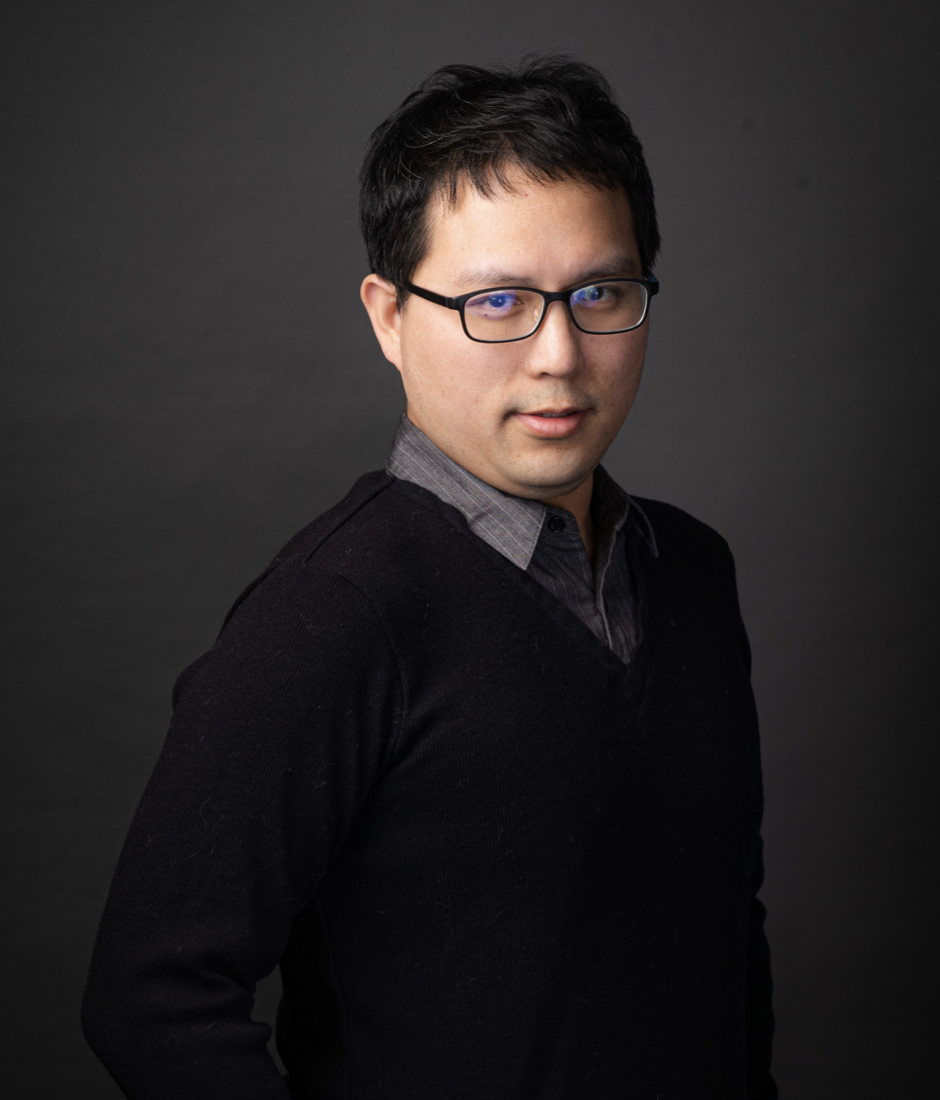
Learning to Rely on God

29 minute read

Published:

Looking back on my journey from Taiwan to the United States to pursue my doctoral studies, I realize that God was not simply leading me toward my dream of becoming a professor. Through years of dreams, setbacks, disappointments, and struggles in faith, He was teaching me, step by step, to rely on Him rather than on myself.

During my university years, I came to know the true faith and was baptized into the name of the Lord Jesus. As a physics student, I was fascinated by the natural world and deeply amazed by the wonders of God’s creation. During my junior year, I took a course on Einstein’s General Theory of Relativity. Learning how the stars and the universe move filled me with awe, and from that time on I set my heart on pursuing a Ph.D. overseas. I also dreamed that one day I might become a professor and devote my life to scientific research.

In 2017, I came to the United States to begin my Ph.D. in physics at the University of Arizona. I arrived full of hope, believing that I was taking the first step toward my dream. I never imagined that the years ahead would instead be filled with one setback after another, together with disappointment and pressure.

The first challenge was the language. Although I had studied English for many years in Taiwan, it was still not my native language. When speaking with native English speakers, there were many things I simply could not understand. Sometimes I understood every word in a sentence but still could not understand what the speaker actually meant. During conversations, I often had to ask people to repeat themselves. As this happened again and again, my confidence gradually faded. Sometimes I used the wrong word, and people would simply smile. But after it happened repeatedly, whenever someone smiled while I was speaking, I began to wonder, “Are they laughing at me? Is my English really that poor?” I often asked myself, “Why am I so inadequate? Why can I never express myself well?”

The second challenge was financial. Living in the United States was far more expensive than living in Taiwan. Eating out was costly, so we learned to cook all of our meals ourselves and to live as frugally as possible. As an international Ph.D. student, I was not allowed to take any additional employment beyond the stipend provided by the university. Supporting an entire family on a graduate student’s income was extremely difficult. Saving money was simply out of the question. We could only think about how to spend less so that we could make ends meet.

The third challenge was the distance to church. The closest True Jesus Church to the University of Arizona was the Phoenix Church, about 160 kilometers away—roughly the distance from Taipei to Taichung. Every Sabbath, I had to leave on Friday, stay overnight at a brother’s or sister’s home, and return on Saturday after service. Before we owned a car, I depended on rides from others and had to adjust to their schedules. Compared with life in Taiwan, where attending church required little effort, this was a tremendous adjustment. The long hours of driving and constant fatigue gradually wore me down. Eventually, I could only attend church every other Sabbath and listen to the sermons online during the alternate weeks.

These were all pressures that I had never experienced in Taiwan. At first I thought that, given enough time, I would gradually adapt. Instead, things became increasingly difficult, especially because of the tremendous pressure of pursuing a Ph.D. Doctoral study is very different from undergraduate study. Much of the work must be done independently, and one must learn to live with uncertainty, not knowing whether years of effort will ever produce meaningful results. Every day I spent countless hours searching the literature, studying the work of other researchers, and exploring every possible solution. The research project I was working on was both highly novel and extremely challenging, and no one knew whether it would ultimately succeed.

My advisor faced significant pressure from the company funding our research, and naturally he also expected steady progress from me. During that period, he frequently asked about my research, sometimes late at night, and his comments on my work could be very direct. As a doctoral student, I often found those interactions discouraging.

At the time, I believed these hardships were simply part of the training required to pursue my dream, so I endured them quietly. Yet the uncertainty, the loneliness of living in a foreign country, the cultural differences between Taiwan and the United States, and the continual criticism despite my sincere efforts gradually wore away my confidence and patience. I kept hoping that things would eventually get better.

Instead, during my Ph.D. years, two major events pushed me into an even deeper despair.

Trials Within the Church and the Collapse of My Dream

Just when I thought things might gradually improve, two major events during my Ph.D. years pushed me into even deeper despair.

The first came from within the church. The Phoenix Church consisted of two generations: the older generation had mostly immigrated from Taiwan or China, while the younger generation had grown up in the United States. Having grown up in one of the world’s most developed countries, some people would casually speak as though anything different from America was somehow strange. At that time, I had only been in the United States for a few years. I was already struggling with homesickness while facing one setback after another, yet I would sometimes hear comments such as, “I would never want to visit a place like Taiwan,” or, “That’s really strange. America is much more normal.” Those words reopened the loneliness I already felt. I began to wonder, “Is it wrong for me to miss Taiwan? Am I the strange one?”

As a physics student, I also encountered unrealistic expectations. Some people would say, “You’re studying physics. Shouldn’t you know everything?” Others joked, “What kind of physics Ph.D. student are you?” One brother even asked, jokingly, whether my wife was my seventh girlfriend. Looking back, I do not think most of these comments were made with bad intentions. However, at that time my confidence had already been worn down by years of pressure. Because my English was still limited, I often could not express how hurt I felt. Every day I was criticized by my advisor, laughed at by others, and gradually reached the point where even I no longer believed in myself. No matter what I did, I felt like a complete failure.

Some of the older brethren also spoke to me out of what they believed was concern. They would ask, “Why do you leave immediately after the service? Are you avoiding holy work?” or, “Why do you only come to church every other Sabbath? Don’t you know we should keep the Sabbath every week?” Although these words sounded caring, they also reminded me of the guilt I already carried. They did not know my circumstances. Their homes were only a short drive from church, while mine required about four hours of driving for a round trip. They had jobs and could easily eat out, whereas I was a graduate student supporting a family and had to cook every meal to save money. During the week I devoted nearly all my time to research, so after returning home on Saturday I still needed to prepare meals for the coming week. I often asked myself, Why do people judge from their own perspective without first understanding another person’s situation? From the time of the Lord Jesus until today, people have often judged others without fully understanding what they were going through. Although I knew this, the hurt and frustration were still very difficult to overcome.

Another difficulty was that politics was frequently discussed among the brethren. Since many members were from Taiwan or China, conversations often centered on cross-strait politics. When I was in Taiwan, ministers had reminded us not to discuss politics in church. Here, however, such conversations often took place openly after Sabbath services. I even had someone tell me, “Young people of your generation have flawed thinking if they support that political party in Taiwan.” These experiences made me feel even more isolated.

The second major trial came through my doctoral studies. Between 2020 and 2022, the COVID-19 pandemic severely disrupted research in the United States. Only one person was allowed in the laboratory at a time, so we had to work in shifts, often late at night or before dawn. Because of the pandemic, laboratory equipment could not be serviced promptly and frequently malfunctioned. We spent countless nights performing experiments, only to discover that poor results were often caused by unstable equipment rather than our own work. Since research funding depended heavily on research progress, the delays caused by the pandemic made it increasingly difficult to maintain financial support. My advisor became very frustrated and placed all of that pressure on me. He criticized me for lacking ability, said I was not working hard enough, told me that I was not qualified to continue my Ph.D., terminated my funding and tuition support during my fifth year, and instructed me to withdraw from the program.

For an international student, this was devastating. Tuition and living expenses in the United States amounted to more than two million New Taiwan dollars each year. Without funding, I had no way to continue my studies. If I could not complete my degree, I would lose my student status and have only three months before I would have to leave the United States. I kept asking myself, “Am I really that incapable? Am I really not qualified? I know I cannot graduate without research results. If it took me eight or even ten years, I would have accepted that. But now I am simply being asked to leave.” I was deeply hurt by my advisor’s decision. Many of my friends were upset on my behalf and encouraged me to stop spending any more effort on my research, give up my Ph.D., and begin planning a different future.

How many nights had I stayed awake doing research, only to see no results? How much effort had it taken simply to survive in a foreign country while enduring misunderstanding and ridicule? How much energy had gone into caring for my young daughter, who cried constantly during those years? I could not understand why everything had turned out this way. Even strong faith can be difficult to hold onto under such circumstances. I had pursued this dream believing it was filled with hope, yet it now seemed to lead only to endless disappointment. I repeatedly asked myself, Is all of this really worth it? Should I continue or should I let go? What is God’s will?

Eventually, the burden became so great that I poured out everything I had been carrying on social media. I honestly wrote about my struggles during graduate school, the difficulties of living overseas, and the hurt I had experienced in church. As I reflected on my situation, I thought about Peter walking on the sea. Many people focus on Peter’s lack of faith, but what impressed me most was that when he realized he could no longer save himself, he cried out,

“Lord, save me.”
(Matthew 14:30)

That also became my prayer. I simply asked the Lord to give me the strength to walk through this difficult period.

After many brethren read what I had written, I received many responses. Quite a few apologized, saying they had never realized how much pressure an international student experiences after coming to another country. They thanked me for honestly sharing my struggles. Their responses left me with mixed emotions. I knew everyone meant well, yet because of human weakness and misunderstanding, people can still unintentionally hurt one another. Speaking honestly about my pain brought me a sense of relief, and seeing their responses reminded me that they genuinely cared about me. Some brethren living overseas also told me that I had expressed feelings they themselves had never been able to put into words.

Because of the pandemic, I attended church less and less in person. Those painful experiences remained in my heart and became heavier over time. My participation in church gradually became passive, my faith weakened, and I found myself becoming increasingly anxious and easily discouraged.

Learning to Do My Best to Fulfill My Responsibility

Gradually, I realized that no matter how hard I tried, there were some things I simply could not control. The only thing I could do was accept them. My family and I began praying together every day, yet nothing seemed to change. Little by little, I also began preparing myself to leave the university. Although my heart was filled with disappointment and reluctance, I started saying goodbye to my friends one by one as I prepared to withdraw from the program and leave the United States.

However, just as I was saying goodbye to the last friend I planned to meet, God helped me at the very last moment. During our conversation, my friend encouraged me, saying, “Don’t just give up and leave like this. At least finish what you have started. Do your best to fulfill your responsibility.” After thinking about his words carefully, I felt they made sense. Although it was painful, I realized that while I could no longer decide whether I would graduate, I could still decide whether I would faithfully do what I ought to do.

So I returned to the laboratory. Even though I believed I would soon be leaving the United States, I continued going to the lab every day and did my best to finish the work that remained. Although I still had no research results, I had accumulated several years of experience, and I hoped to organize everything carefully so that those who continued the project could benefit from it. Every day I simply did my best to fulfill my responsibility, even though I knew I might be leaving very soon.

About a month later, my advisor unexpectedly called me into his office and said, “I’ll continue paying you. Let’s discuss your graduation.” I could hardly believe what I had just heard. Throughout my Ph.D., my advisor had never talked with me about graduation because my research had produced so few results. As for my dream of becoming a professor, I no longer even dared to think about it. I did not know what had happened, but it seemed that my advisor’s attitude had also changed, and for the first time he was willing to discuss my graduation with me.

Even more remarkably, about a month after that conversation, I finally saw the experimental results that I had long hoped for. After nearly five years of research, countless sleepless nights, and repeated failures, I finally saw the breakthrough I had been waiting for. At that time, almost no one believed I could succeed anymore—not even I believed it myself. Looking back, if I had simply given up in anger and stopped going to the laboratory, none of this would have happened. I am deeply thankful that God saved me at the very last moment and did not allow me to abandon my responsibility because of my emotions. Even when I no longer believed in myself, God still gave me another opportunity and taught me what it means to do my best to fulfill my responsibility.

About six months later, in 2022, I was organizing the work from my doctoral research and preparing to graduate. Although my advisor had decided to let me graduate, one thing continued to weigh on my mind. I could not forget the day he had told me that I was not qualified and wanted me to leave the program. Before graduation, I finally gathered the courage to tell him honestly how I had felt over the past several years.

I said, “Professor, when you told me that I wasn’t qualified and wanted me to leave the program, I accepted it because I believed I really wasn’t suitable for a Ph.D. But if that was true, why did you later ask me to come back and graduate? Am I qualified or not? You told me that I wasn’t qualified, and even now I still cannot forget those words. Was I really that incapable? If so, why am I graduating?”

It took a great deal of courage to say those words. It was also the first time I had spoken so honestly to my advisor about what had been in my heart.

He replied, “Bo-Han, just forget what I said back then. At that time, I was under tremendous pressure from the company supporting our research, and I let that pressure affect the way I treated you. Don’t keep those words in your heart. I’m glad you were willing to tell me honestly how you felt.”

Then he said something that has remained with me ever since:

“Don’t be too concerned about what I say or what other people think of you. I used to care a great deal about other people’s opinions too. Later I realized that what really matters is whether you are determined to do your best to fulfill the responsibility entrusted to you. Whether you complete that responsibility is far more important than how other people see you.”

Looking back now, I think what he said was true. Life is full of difficulties, and we cannot control how other people judge us. Rather than worrying about what others think, what matters more is whether we have done our best to fulfill the responsibility entrusted to us. We cannot always know which choice is the right one. What we can do is simply do our best. Whatever path God opens before us, we do our best to walk it.

After all those years of suffering, I gradually came to understand what God had been teaching me. Through those trials, He taught me to rely on Him, to recognize my own weakness, and to understand what it truly means to do my best to fulfill my responsibility. Before I graduated, my advisor and I were finally reconciled. The resentment that I had carried for so many years gradually disappeared. Looking back, I could never have imagined that in only a few months, everything would change so dramatically.

After my advisor and I were reconciled, he strongly recommended me for a postdoctoral position at the Massachusetts Institute of Technology. MIT had always seemed completely beyond my reach, and I never imagined I would have the opportunity to study there. During my Ph.D., I had failed countless times and had already accepted that I was simply a failure. Suddenly, I found myself entering one of the world’s leading universities. It was difficult to believe.

Looking back, I deeply realized that life is full of hardships and trials. All we can do is faithfully do our best and present our best before God. God understands our needs and knows what is best for us. Sometimes He opens a way for us, and sometimes He asks us to wait. In every circumstance, however, He allows us to experience His grace.

God’s Guidance Beyond My Expectations

After arriving at MIT, my dream of becoming a professor, which had almost disappeared, gradually came back to life. At the same time, however, I knew how difficult that path would be. I had often heard that obtaining a faculty position was extremely difficult. Many people spend years searching for a position, and some even spend ten years without success. Obtaining a faculty position at an American university is already highly competitive, and securing one at a major research university is even more difficult. Although I still hoped to pursue that dream, I also knew that the outcome might not be what I hoped for. After seeing so many talented people fail and eventually give up, it was difficult to convince myself to pursue it wholeheartedly.

After arriving at MIT, I found myself facing even greater pressure than before. I was surrounded by some of the brightest researchers in the world—experts in their own fields whose publication records far exceeded mine. It was difficult not to compare myself with them. I often asked myself, “Do I really belong here? Am I really capable of working alongside all of these brilliant people?” The responsibility of supporting my family, together with the fear that I might not be capable enough, often left me discouraged and anxious.

At that time, I was especially encouraged by these words from the Bible:

“My grace is sufficient for thee: for my strength is made perfect in weakness.”
(2 Corinthians 12:9–10, KJV)

As I reflected on my situation, I realized that much of my pressure came from comparing myself with others. In this world, competition seems unavoidable. Opportunities are limited, resources are limited, and we often feel that we must surpass others in order to succeed. That is how the world operates.

But as Christians, we are different.

“These things I have spoken unto you, that in me ye might have peace. In the world ye shall have tribulation: but be of good cheer; I have overcome the world.”
(John 16:33)

Even though we live in a competitive world, we do not need to define our value by whether we are better than someone else. I simply need to do my best to fulfill my responsibility. As for where God leads me, I am willing to follow. There are still times when I am weak and unwilling to submit, so my prayer became, “Lord, I am willing to do my best to fulfill my responsibility. As for the path You lead me on, I am willing to follow. Yet I know I am weak, and there are times when I do not want to submit. Please give me the strength to learn obedience.” Precisely because I am so weak, God’s power is made even more evident through me.

When it came time to look for my next position, although becoming a professor remained my greatest hope, I also applied for many industry positions. I wanted to cherish every opportunity that God might prepare for me, and I believed that doing my best in every opportunity was also part of doing my best to fulfill my responsibility.

However, God had His own plan. I submitted nearly one hundred job applications to companies throughout the United States and interviewed for many positions, yet every one of them ended in rejection. Since I had already done everything I could, those experiences strengthened my determination to continue applying for faculty positions. I prayed, “Lord, I know obtaining a faculty position is difficult, but I will do my best.”

Not long afterward, God opened another door. MIT happened to offer a course on how to apply for faculty positions in the United States. One of my colleagues noticed the course and invited me to attend with him. At first I was somewhat reluctant, but after joining the course, I realized how beneficial it was. While preparing my faculty applications, I learned how to develop stronger research proposals, discussed my ideas with others in the class, and received valuable suggestions from different perspectives. Professors and former students who had successfully obtained faculty positions also returned to share their experiences and advice. Looking back, I can clearly see God’s guidance. Whenever I needed help, He always prepared opportunities and people around me at just the right time.

As I prepared my applications, I also prepared my heart in case I was not accepted. I believed that God knows which path is best for me. Although I would certainly feel disappointed if I never became a professor, life is full of disappointments. Perhaps I simply needed to learn to hold my own dreams more lightly. After all, shouldn’t the greatest dream in our lives be to dream for the Lord?

With that mindset, I submitted applications to nearly one hundred universities. As long as the advertised research area matched my background, I was willing to apply. To my great surprise, I received an offer from the University of Hawaiʻi. I had never imagined that I would receive a faculty offer during my very first application cycle. Ironically, the colleague who had invited me to attend the MIT faculty preparation course did not receive an offer that year, and I even felt somewhat sorry toward him. Looking back, many of my colleagues and friends had stronger résumés and more impressive accomplishments than I did. By every human measure, they appeared far more qualified than I was. Yet the outcome was different.

“‘Not by might, nor by power, but by my spirit,’ saith the LORD of hosts.”
(Zechariah 4:6)

When my doctoral advisor heard the news, he was genuinely happy for me. He even told me that it had taken him four years before he obtained his first faculty position, whereas I had received one after only a single application cycle. Looking back, I know that such an opportunity cannot be explained by human effort alone. If even my advisor had been unable to accomplish it through his own ability, how could I? Time after time, when I had fallen into disappointment and despair, God brought me back through His word. Even though I had failed many times and often doubted myself, God still granted me blessings far beyond what I could have imagined. I do not believe these things happened by coincidence. I know that God has always understood my heart. Even when I did not understand myself, and even when those around me did not understand me, He understood.

Looking Back

For the past seventeen years, I thought God was leading me toward my dream of becoming a professor. Only later did I realize that what He truly intended to accomplish was something entirely different. He wanted to teach a proud person, who believed he could rely on himself, to acknowledge his own weakness and to continue crying out,

“Lord, save me.”

Personally, I do not enjoy a life that seems to repeat the same pattern over and over again—hardship, turning back to God, and then experiencing His salvation. Yet looking back, perhaps this is simply the normal course of life. When we learn to hold more lightly the gains and losses of this world, our hearts also become less attached to them. No matter how joyful or painful our present circumstances may be, they will eventually pass.

“For I think that God hath set forth us the apostles last, as it were appointed to death: for we are made a spectacle unto the world, and to angels, and to men.”
(1 Corinthians 4:9)

Life is filled with many ups and downs, but those circumstances are only part of the story God has written for each of us. What truly matters is whether we have faithfully fulfilled the role He has entrusted to us.

Looking back now, I realize that becoming a professor was never the most important thing, and God certainly did not owe me that opportunity. Precisely because of this, I am especially thankful that He still allowed me to realize that dream. I now understand that the suffering I experienced was never ultimately for the sake of becoming a professor. Rather, through that journey, God taught me what faith is, what life is, what faith is, and what it means to acknowledge my own weakness.

Looking back, I thank God not because He allowed me to earn a Ph.D., conduct research at MIT, or become a professor. I thank Him because even when I no longer believed in myself, He never gave up on me. Time after time, through my weakness, He taught me to cry out to Him:

“Lord, save me.”

May all glory be to the true and living God. Amen.