Lab Mission
The Quantum AI Laboratory (QuAIL) is a multidisciplinary research group working at the frontier of quantum information science, machine learning and photonics. Our mission is to bridge the gap between theoretical innovation and experimental realization, developing the next generation of photonic quantum technologies.
We specialize in four key research thrusts:
- Continuous-Variable Quantum Neural Networks (CV-QNN): We develop machine-learning algorithms to optimize the quantum circuit (i.e., VQC) specifically for continuous-variable (CV) and hybrid CV-discrete-variable (CV-DV) quantum systems to generate non-trivial quantum states, see Figure 1. (Theory)
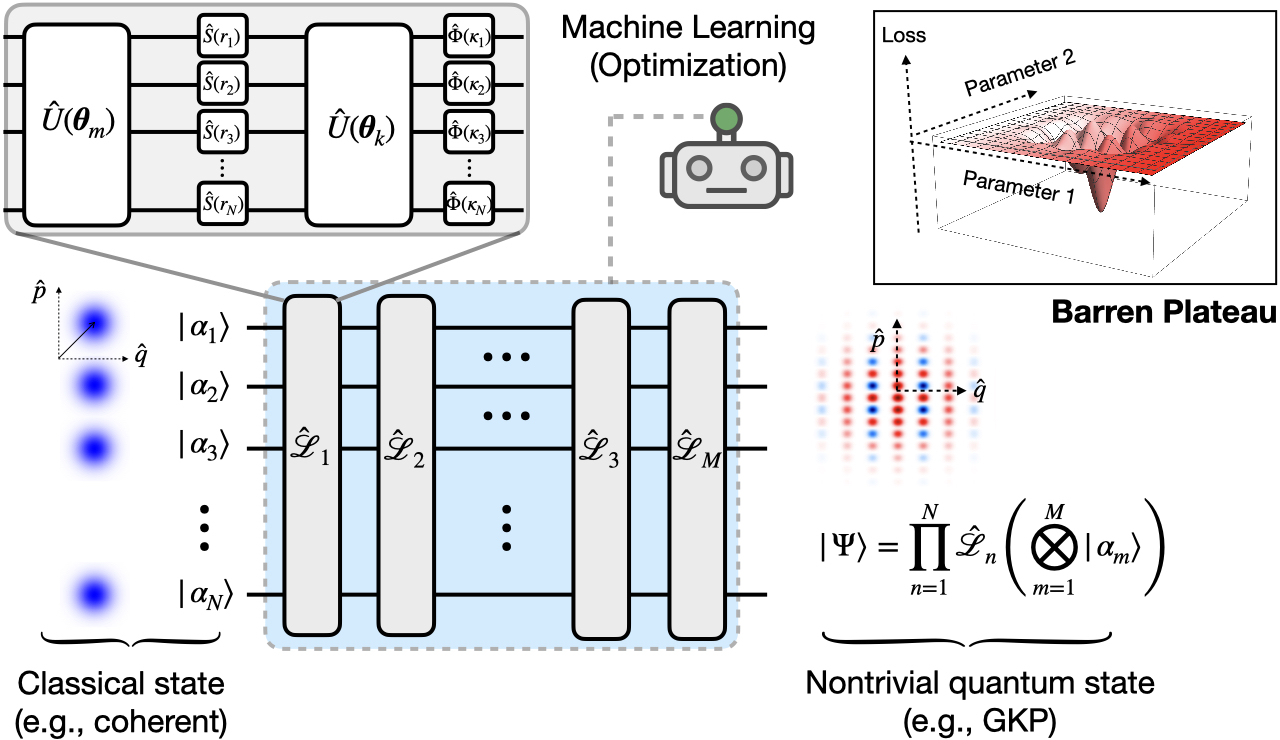
Figure 1: Scheme of continuous-variable quantum neural network (CV-QNN) [1,2].
[2] Arrazola, J. M., et al. "Machine learning method for state preparation and gate synthesis on photonic quantum computers." Quantum Sci. Technol. 4, 024004 (2019).
- Intelligent Distributed Quantum Sensing: We investigate spatially distributed, entangled quantum sensor networks [3] capable of analog computing. Taking the advantage of machine learning optimization [4], our work focuses on capturing and utilizing complex quantum correlations through quantum intelligent sensor network (QISN) architectures, see Figure 2. (60% Theory / 40% Experiment)
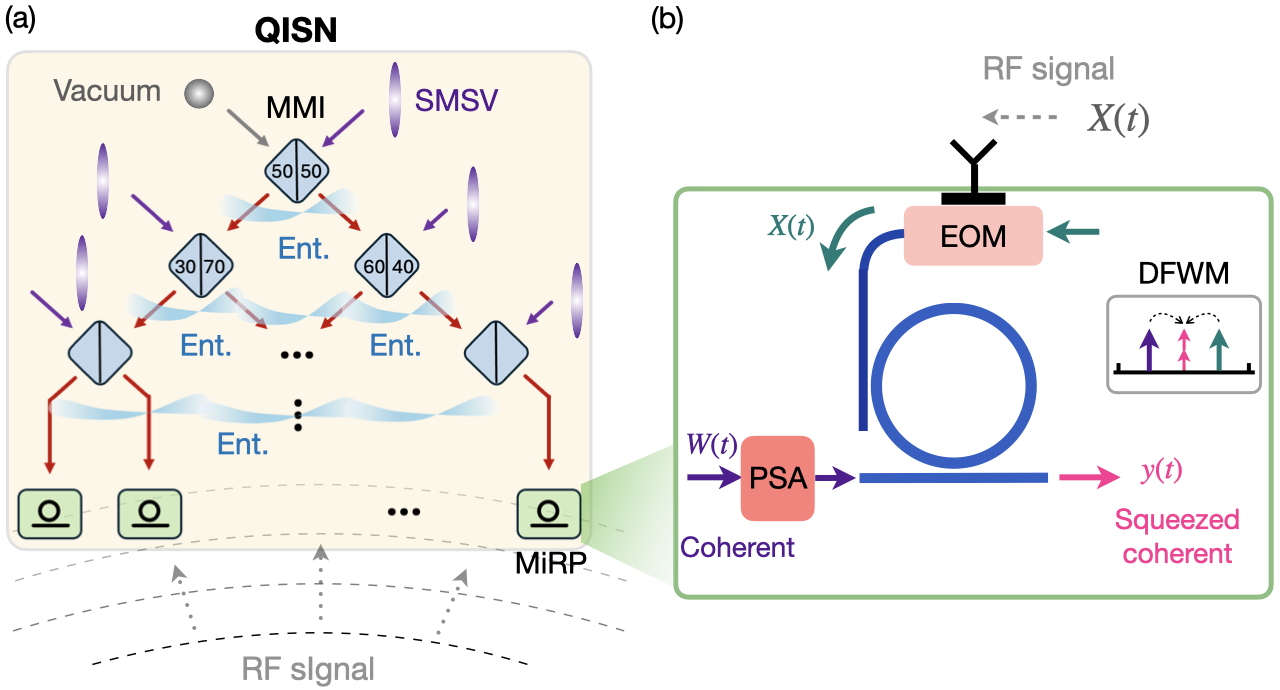
Figure 2: Scheme of quantum intelligent sensor network (QISN). (a) Overal architecture of QISN. (b) Layout of quantum sensor (microring resonator). MiRP: microring perceptron [2]. PSA: phase sensitive amplifier.
[4] Wu, B.-H., et al. "Micro-Ring Perceptron Sensor for High-Speed, Low-Power Radio-Frequency Signal." arXiv:2504.16119 (2025).
- High-Speed Quantum Networks: We design and analyze midpoint source protocols to enable long-distance entanglement distribution with high-speed performance, see Figure 3. We had some preliminary results in CV quantum repeater [5]. (Theory)
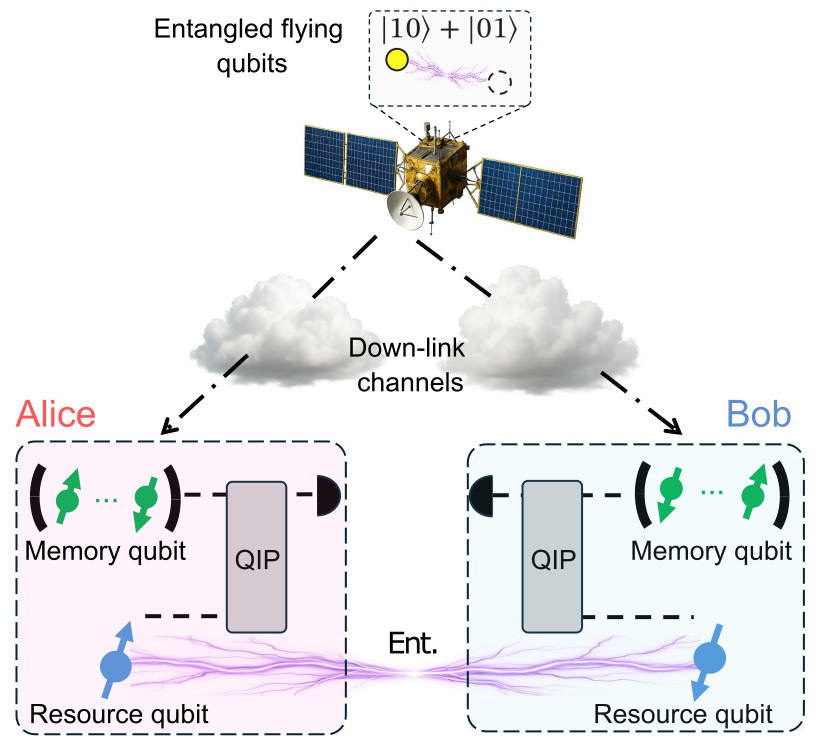
Figure 3: Scheme of long-haul entanglement generation.
- On-Chip Optical Squeezing: We drive the full lifecycle of photonic hardware, from design and tape-out (or fabrication) to characterization and analysis of on-chip optical squeezers. Figure 4 shows the layout of on-chip squeezing testbed. (Experiment)
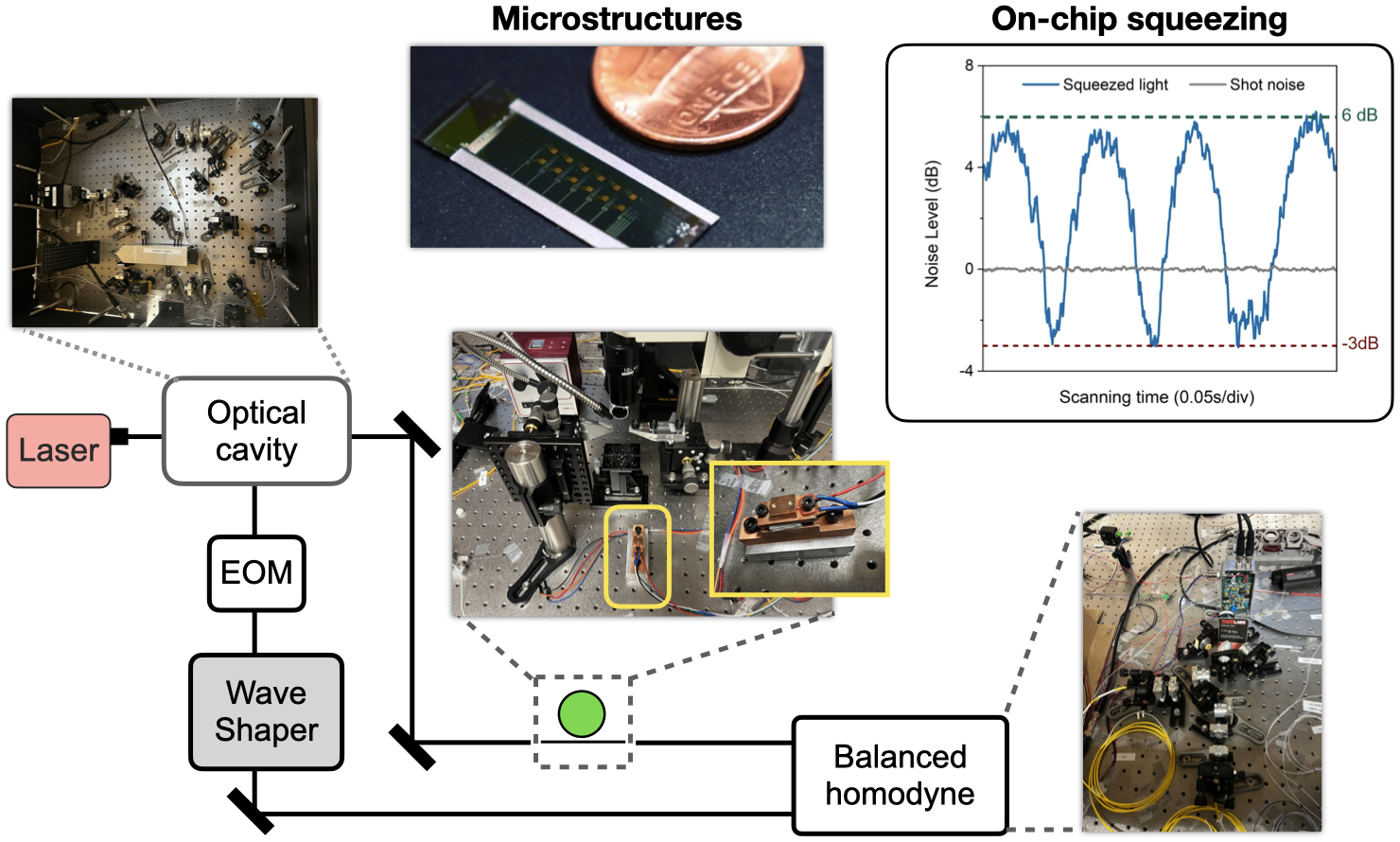
Figure 4: Rough sketch of the on-chip squeezing experiment layout [6].
Join us: We are always looking for motivated students and collaborators. Please visit the Join Us page for more information.